American Aviation Historical Society
MEMBERS SHOULD LOG IN FIRST TO ACCESS FULL ARTICLES
|
EFFECTIVE IMMEDIATELY
American Aviation Historical Society
P.O. Box 483 Riverside, CA 92502-0483 FEDEX and UPS packages should be sent to:
American Aviation Historical Society
Flabob Airport 4130 Mennes Ave, Bldg. 56 Riverside, CA 92509 |
|
|
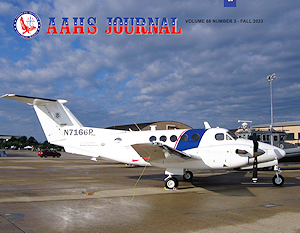
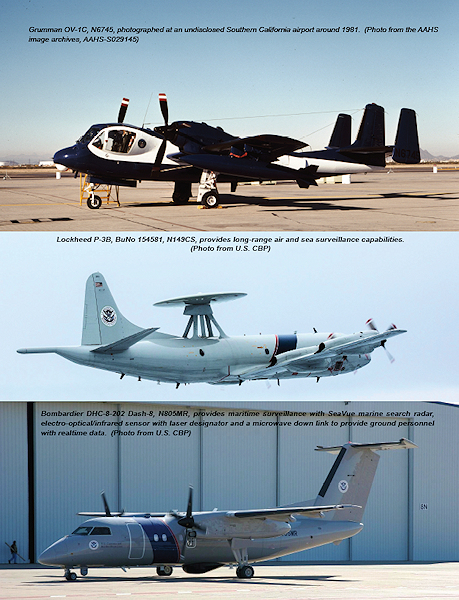
When American Prohibition was implemented in 1920, the U.S. Customs Service, a forerunner of today’s Department of Homeland Security’s Customs and Border Protection, was expected to address any smuggling across the nation’s land borders or via otherwise legitimate commercial shipping. At the same time the U.S. Coast Guard, already burdened with numerous maritime related missions, was primarily responsible for stopping smuggling by sea, with the Internal Revenue Service tasked with addressing domestic diversion of industrial and medicinal alcohol, as well as the illicit production of alcohol through its newly created Prohibition Unit. All were under the Secretary of the Treasury. Whether done by bridge across the Detroit River or by burro across the Rio Grande, Customs was required to use its limited personnel to prevent this new, in demand and profitable contraband from entering the United States. As technology improved and as organized crime became involved, Customs to improvise in its attempt to control the nation’s borders. Though vessels were the backbone of smuggling wherever waterways made them feasible, and trains, trucks and cars were utilized at land border crossings, airplanes quickly came into use. As early as 1922 the Literary Digest magazine published a photo of an aerial rumrunner, identified as being en route from Canada, crashed on the banks of the Hudson River north of New York City. Al Capone’s brother and partner, Ralph Capone, maintained a fleet of aircraft, which included a Ford Tri-Motor, operating across the U.S.-Canada border. A Canadian trafficker who worked with Capone, as well as other organizations, was reported at one point to be loading a plane a day, 25 cases per aircraft, utilizing a variety of farmers’ fields in Canada to avoid detection. Farther east, another rumrunner was suspected of using a float plane for counter-surveillance over Lake Ontario. Yet federal funding to counter this new tool of traffickers was not forthcoming, requiring various Customs field agents to use their own initiative to address the problem. By the late twenties Customs was able to obtain a couple of Curtiss O-1G Falcons, using various Customs agents as pilots on an ad hoc basis. San Diego Customs seized and put into use a Ryan monoplane in 1932 after it was caught during a smuggling attempt. But it would be in Texas, specifically San Antonio, where one of the largest fleet of aircraft was established. After Customs mounted inspectors apprehended a former World War I pilot flying an aircraft into an airstrip near Cotulla, Tex., transporting cans of alcohol, the local Customs office brought on board a "special employee" to pilot the newly seized aircraft. Working along the southern border, hiding the aircraft at makeshift airfields, the pilot and his compatriot, a mounted customs inspector and former Texas Ranger, launched upon seeing an aircraft flying overhead north toward San Antonio. After intercepting it, signaling to the smuggling pilot to land while, at the same time, raising a rifle to infer the consequences of failing to comply, they managed to obtain a second aircraft. As more apprehended aircraft entered the Customs inventory, with no maintenance or support funding, other seized aircraft provided the parts needed to keep the best airframes operational. Eventually the San Antonio air unit had eight aircraft in their fleet plus numerous others cannibalized for spare parts. Budgets were so tight, this group, based on Army . . . |
|
|
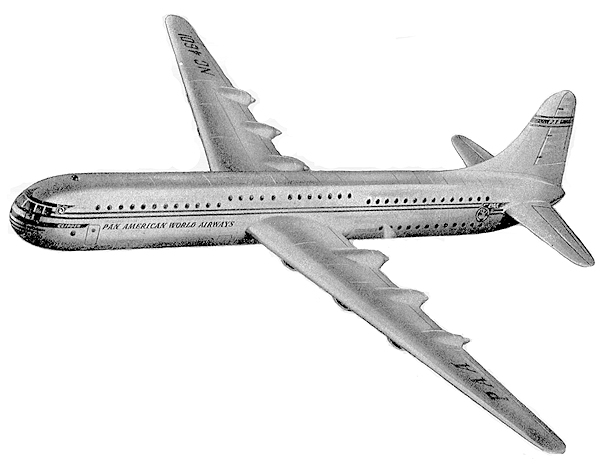
The First Jumbo Airliner: The Convair XC-99
Long before the term ‘jumbo jet’ was coined, there was an aircraft that certainly deserved the jumbo description. That was Consolidated’s Model 37, a military transport
and airliner derived from the B-36 bomber (Consolidated’s Model 36). One 37 was ordered in late 1942 with the military
model designation XC-99-CO. Throughout its service life, it was the world’s largest regularly and productively flying
aircraft. Fifteen civil 37s were ordered by Pan American
Airways early in 1945 for its postwar fleet. Even though WWII
was not yet won, Pan American optimistically expected to place the aircraft in service by 1950. The B-36 on which the 37 was based originated before America was actively involved in WWII.
Most of Continental Europe had fallen under Axis aggression by early 1941, and Britain’s fate was still precarious. Japanese aggression had already been raging in Asia for some time. Due to the advent ofairpower, America could no longer be assured that it would be insulated from ongoing war in other parts of the world by the Atlantic and Pacific Oceans. There was growing concern that America might be drawn into war and have to resist aggression from our own shores. Apparently, the attention was focused more on war from across the Atlantic then than from the expanse of the Pacific. The two manufacturers of bombers that were large by prewar standards, Boeing Aircraft Co. and Consolidated Aircraft Corp., were invited to prepare design studies for very long-rangebombers capable of carrying substantial bombloads nonstop
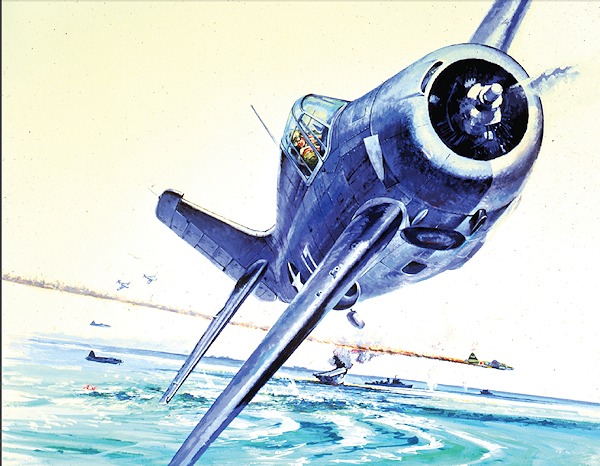
to the Axis in Europe. Boeing received Contract AC-15429 to design and produce the smaller B-29 Super Fortresses, which literally brought WWII to an end. Contract AC-22352was given to Consolidated shortly afterward on November 15, 1941, for two prototypes of what would eventually be thehuge B-36s. Northrop was also a contender; but production contracts for its B-35 flying wing, including 200 to be producedby Martin under license, were later cancelled — due either to its shortcomings or undue political interference depending on one’s point of view. Apart from their size, B-36s were unique by having six pusher-mounted powerplants — the new and powerful 28-cylinder Pratt & Whitney R-4360 Wasp Major engines with Curtiss propellers. Wasp Major engines were used in a number of other military models and Boeing Stratocruisers, but their engines would differ in detail because of their tractor installations. America was drawn into WWII less than a month later, not by events in Europe as feared but by the Japanese attack on Pearl Harbor. As a result, America had to declare war on Japan the next day; and Japan’s Axis allies, Germany and Italy, declared war on America a few days later. Fortunately, we were not forced to fight the Axis from our own shores, so development of the B-36 was initially delayed due to higher priorities. Later, it finally received renewed attention. When first flown on August 18, 1946, the XB-36-CF replaced the Martin Mars flying boat as the largest airplane in the world. The production B-36s that followed would never be used in combat, but would be a very potent deterrent in the then unforeseen Cold War. They were named unofficially, but appropriately, Peacemakers.Referring no doubt to the "speak softly and carry a big stick" quote in 1901 from future President Theodore Roosevelt, they were also described as America’s "Big Stick." Consolidatedt . . . |
|
|
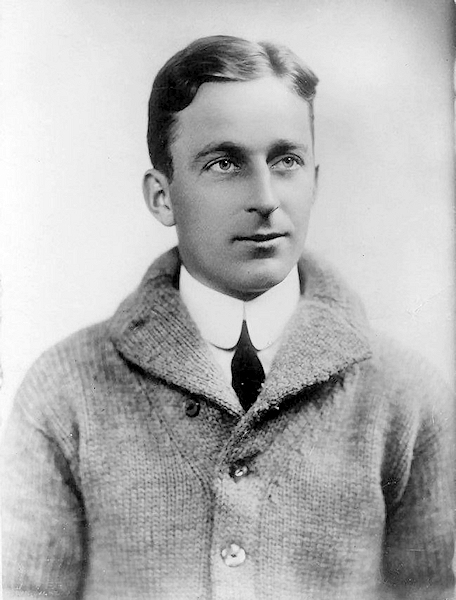
Howard Warfield Gill; Howard Warfield Gill was born at Baltimore, Maryland May 13, 1883, of wealthy parents. In his youth he loved automobiles and became an expert driver and engine specialist. On finishing school, Gill established an automobile agency in Baltimore that rapidly grew to be one of the leading car sales firms of the city. This led him to auto racing and he became quite renowned in this sport. In 1908, Gill won 26 of 31 races he entered and competed as an amateur in the Long Island, N.Y., Vanderbilt Cup Race where he finished 17th in a Thomas Racer due to mechanical problems.[1] In search of new thrills he became interested in ballooning, so bought one and made ascensions for period of time. With the advent of flying Gill naturally became interested and, with one of his ballooning associates, Hillery Beachey, Lincoln Beachey’s older brother, entered into a partnership in 1909 to build an airplane. They secured permission from Glenn Curtiss to take measurements of a Curtiss biplane on display in a New York department store, then proceeded to build a modified copy of the machine at Baltimore, using a re-worked and lightened American-British 26-hp automobile engine secured from Harry Dosh. About the time the plane was finished they learned of an aviation meet to be held at Los Angeles in January 1910 and decided to enter their machine. After arriving on the West Coast and with no previous flying experience, Beachey made several brief hops prior to the event. On opening day, they experienced bad luck when the engine backfired and set fire to the lower wing. Repairs kept them busy until the fourth day of the meet when Beachey again attempted to fly. This time he got off and flew a short distance, but an overheated engine caused a pancake landing, smashing the undercarriage.[2] On January 19 he made a flight of over two miles but almost collided with Paulhan causing Beachey to lose control and wreck the plane.[3] Following the meet, they rebuilt the machine in Los Angeles, moving the plane to the newly established permanent flying facility in the Playa del Rey-Venice area established in cooperation between the Los Angeles Motordrome company and the Aero Club of California. Beachey continued to practice flying it and Gill began flying as well at this location.[4] In April the Gill-Dosh Aeroplane Co. was formed to manufacture planes and give exhibitions. The company was originally incorporated in Los Angeles, California.[5] The incorporators were Howard Gill, Harry S. Dosh and Hillery Beachey. They continued development work and during this period Gill also started to learn to fly. They began building a second, improved machine. Hoping to produce something original they eliminated the front elevator and made the first . . . |
|
|
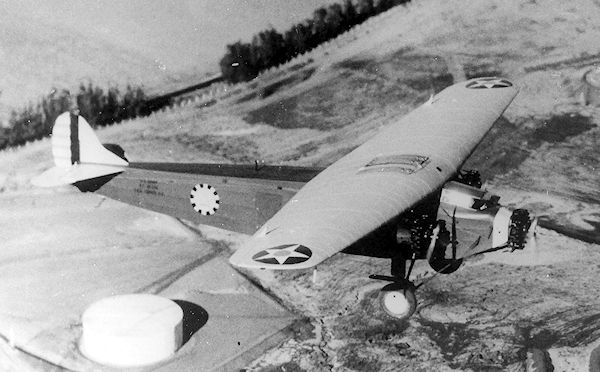
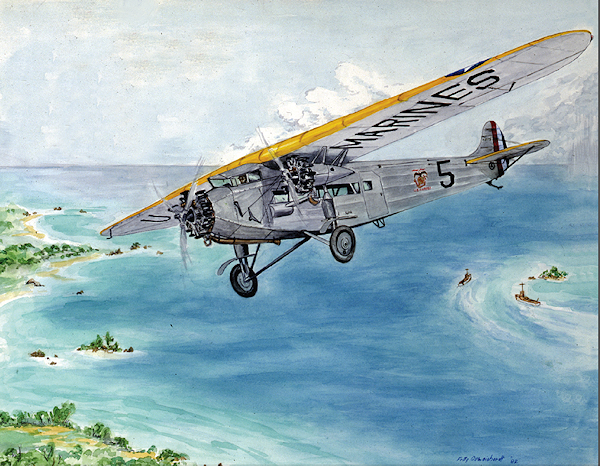
Fokker’s Trimotors for the U.S. Services Fokker’s slow start in the U.S. Mid-1921 Fokker F.III airliners started to arrive in the U.S. with hangar room rented at Curtiss Field, L.I., N.Y., as temporary base. Even local production was announced, but notwithstanding visits to several idle plants on the east coast, no decision followed to start production without substantial orders. Two of the five imported Fokker F.III airliners remained unsold and possibly were shipped back to Europe. Fokker’s intended expansion in the U.S. continued to idle along. This would change when Clement M. Keys, President of the Curtiss Aeroplane & Motor Corp., suggested in letter to Anthony Fokker dated March 18, 1922, that they join forces in the U.S. Fokker expressed interest in a cooperation, and both exchanged letters exploring the potential relationship.[2] In the end however, during his second visit to the U.S., Fokker wrote Keys on June 15, 1922, that he would go his own way. At the time, on the other side of the Atlantic, Fokker’s Netherlands plants were experiencing increased orders formilitary aircraft, and Fokker even considered focusing on gliders rather than airliners. His designer Reinhold Platz at the Veere plant had started with the development of another Noorduyn organized a hasty partnership with Reuben H. Fleet of Gallaudet, to enter it in the Air Service T-3 competition of 1923.3 The plane’s high price prevented an order, which was fortunate as the design proved to be a failure. Winning the competition would have been a Pyrrhic victory for Fokker. On the positive side, the competition brought back Fokker’s attention to transport aircraft, and he even started thinking about twin- and trimotored aircraft. While busy fulfilling large military production orders, particularly from the Soviet Union and the secret German Air Force, Fokker took an import ant step. Early in 1923 he decided to strengthen his design staff with more scientific educated people and assigned Walter Rethel as designer in Amsterdam (and not Platz) to the task of developing a new airliner to be known as the F.VII.[4] This change of the designer’s position from craftsman to a more scientific orientated approach would prove successful, although not immediately.
The Prelude |
|
|
William Lawrence Jamieson, Aviator, 1898-1933 When William Lawrence Jamieson[1] and Carolyn Wooley[2] married
in 1917, Carolyn was barely 18 and Lawrence not yet 20. No one could have predicted the wild and tumultuous life they would create together, centered almost completely around aviation. Lawrence was raised on a family dairy farm in Edmond, Oklahoma. He left home and joined the Signal Corps in 1917. Soon after, he was in the Air Service at Kelly Field near San Antonio, Texas. Lawrence transferred to Camp Morrison in Newport News, Va., in January 1918 and was discharged before the year ended. Lawrence had learned to fly by 1918, before there were any license
requirements. When the war came to an end, he returned to San Antonio and assumed the role of a civilian flight instructor and mechanic, again at Kelly Field. While in San Antonio, Lawrence and Carolyn made connections
with Katherine, Marjorie, and Eddie Stinson and future aircraft designer Claude Flagg,3 who would later play a significant role in Lawrence’s aviation career. Those connections planted the seeds to start his own aircraft company. Carolyn also learned to fly and she would go on to earn her Transport Pilot’s License, learning under Lawrence’s instruction. Carolyn was a pioneer aviator in her own right with over 200 hours of flight time.[4]
Lawrence started barnstorming after building a Curtiss Jenny that was in a crate he had purchased from army surplus. The Jenny was the first of several airplanes that he built and, partly due to the success of that airplane, Lawrence began to think that, eventually, he really could start an aircraft company. Money was always a challenge in the early days, and Lawrence supported his growing family of Carolyn and two kids, Lawrence Jr andCharles, with an assortment of jobs: barnstorming with the Jenny, airplaneechanic work, and any other aviation job he could find.
Lawrence’s brother Warren describes one of his aviation jobs during the mid-1920s: Lawrence’s idea was to run whiskey from Mexico during prohibition. He built an airplane in San Antonio and got himself connected to a gang in Kansas City. He would fly to Mexico, bribe the warehouse people and buy whiskey from them and then bring it back to the military field at Kelly Field, which was a huge area that had no runways. It was a great big prairie. He’d land out in the middle of that place at night and this gang of bootleggers would bring their truck out there, get the whiskey out of the airplane and go before anyone could catch them. The U.S. authorities would hear the airplane land and they’d start hunting for it with their own truck and a bunch of soldiers, but Lawrence would get the airplane unloaded and take off again before they could ever find him. On one of these trips Lawrence got caught in a big rainstorm in Mexico, the engine quit, and he had to land in a field that had a lot of small mesquite trees. This was a biplane and when he landed, the mesquite branches stripped the fabric almost completely off the bottom wing. He had to hole up with a Mexican farmer for a day and was going to try and get some fabric and dope and patch the wing after it dried out. While he was there waiting, before the rain stopped, the Mexican Rurales police force came upon his airplane with these cases and cases of whiskey in it, without any tax receipt stamp. They arrested Lawrence for not paying the tax and put him in jail. Somehow, the gang in Kansas City found out about it and they held up a United States Marshal in San Antonio and took his identification. They then went to Mexico with this U.S. Marshal’s identification and told the Mexican authorities. . . |
|
|
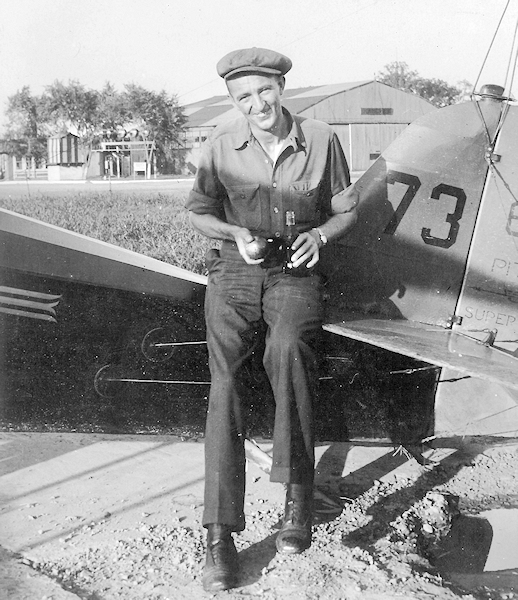
How Steve Wittman Almost Turned Steve Wittman is best known in aviation history for winning air races; designing fast, simple racing airplanes; and for managing the airport in Oshkosh, Wisc., that now bears his name. But had a few twists of fate worked out differently, his legacy may well have included being a general aviation icon among the likes of Beech, Cessna, and Piper. Sylvester Joseph Wittman—"Steve" was never in his legal name—was born in Byron, Wisc., on April 5, 1904. He was the last of five children from his parents, who ran a railroad depot in the town. He had a difficult childhood. At the age of only two weeks, he developed a Herpes-zosta infection that would leave him legally blind in one eye for the rest of his life. His father died when Steve was only eight, and an older brother became an invalid requiring Steve’s attention. To help pass the time while staying at home caring for him, Steve read everything he could get his hands on about aviation and developed an affinity for repairing motorcycles and their engines. He visited barnstormers as they passed through and began learning about the technical aspects of airplanes. This was prior to the Air Commerce Act of 1926, and so no licensing was required to fly, build, or maintain an aircraft. Unable to afford his own machine, teenaged Wittman decided to build one. The result was a crude machine powered by a 60 cubic-inch motorcycle engine that crow-hopped if it hit a high spot in a field. It lasted only a few "flights." Wittman then bought a used J-1 Standard with a friend. Their instructor, who turned out to be only a former aircrew member from WWI but not a pilot as he had portrayed himself, quit, leaving the two teenagers to teach themselves to fly in Fond du Lac, Wisconsin. They did. Wittman’s goal at this point was not to become a professional pilot, but an airplane designer—he assumed that his partial blindness would disqualify him from doing commercial flying. He wanted to learn to fly only so he could flight test his designs and improve them. Wittman attended local air races and competed in some with his J-1 Standard, which was not unlike entering a NASCAR race in a worn out Honda Civic. Steve later borrowed money from an uncle to purchase a brand-new Pheasant H-10 and, after making his own modifications and improvements to it, flew successfully in cross-country races. A trip as a spectator to the National Air Races inspired him to design his own racer and compete at the national level. It was there he saw the DGA-3 "Pete" flown by Benny Howard win "a whole flock of races," even against larger airplanes with more powerful engines. Wittman noted that the design was "a very efficient and tight little ship" with only a 90-HP engine and a cockpit so small that there wasn’t room for the pilot to wear a parachute.[1] &quo; felt that I could beat Pete without too much of a problem&quo; Wittman said.[2] Given Pete’s success and the fact that Wittman had only designed one airplane before (one that did not fly), that was an audacious claim. After the Pheasant Aircraft Company failed in 1928 its remnants were purchased by a Fond du Lac businessman at Wittman’s recommendation, and Steve became extensively involved with flight testing factory airplanes and the design process of new models, all with just his high school education. Pheasant went out of business again at the end of 1929 not long after the start of the Great Depression, and Wittman found himself out of a job. He was approached in 1931 to run the airport in Oshkosh for "a few months or maybe a few years" after several managers came and went.[3] He had an ulterior motive in accepting the job, however. The airport wasn’t especially busy, and while not being paid a salary, Wittman could spend the ample down time to "build this little racing airplane I had in mind."4 As the Great Depression fully set in, the military and companies ceased involvement with air racing, . . . |
|
|
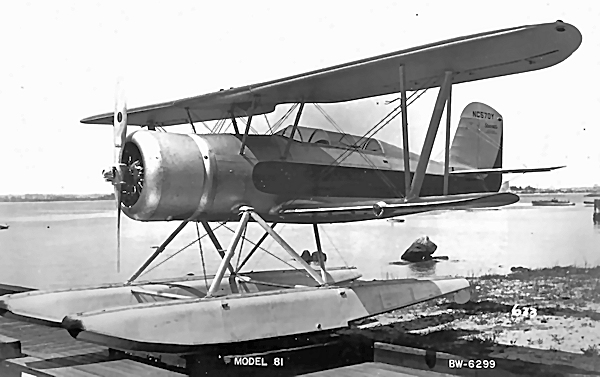
Twin Sisters; The Stearman Models 80 and 81 By the early 1930s the United States, as well of most of the western world, was deeply entrenched in the depths of the Great Depression. The city of Wichita, Kansas and its numerous airplane manufacturing firms, including Cessna, Travel Air and the Stearman Aircraft Co. were no exceptions and fell victim to its effects and consequently were struggling to remain as viable airplane manufacturing concerns. The Stearman Aircraft Co. had experienced nearly a decade of producing outstanding biplanes that had become themainstays of numerous enterprising new airmail companies,several government agencies, civilian flight schools and manyprivate sportsman pilots. By July 1929, it had constructed 248 of its largest production run of civilian biplanes, the C-3B. The last C-3B manufactured, number 249, was modified into the slightly larger and more refined Stearman C-3R Business Speedster of which 38 were built. The final biplane built in
quantity was the elegant Model 4 Speedmail, which was considered by many as "the epitome" of the Golden Age of the classic open cockpit biplanes of the early 1930s. Forty one (41)Model 4s were constructed and served as aerial showcases for many major corporations such as the Standard Oil Co., Texaco, American Airways and several Federal Government agencies as well.[1] Lloyd Stearman was quoted as stating, "It was the finest airplane I ever built."[2] Stearman Aircraft had become a part of the massive conglomerate, United Aircraft & Transport Corporation (UA & TC) and by 1932 the last of its Model 4 Speedmail airplaneshad been delivered and it found itself without a new airplane to manufacture. The majority of its employees had been laid off and only a skeleton crew remained on the payroll. The number of employees had shrunk to less than 25 from its earlier high of 250. However, thanks to its affiliation with the UA & TC and their sizeable finances, the Stearman operation had remained operable as an airplane manufacturer. But money remained extremely tight and Stearman’s business was continuing to operate on a shoestring budget on a day-to-day basis.[3] Unexpectedly, in September 1932, the fortunes of the Stearman Aircraft Company improved. The Boeing Airplane Co. in Seattle, Wash., issued a contract to Stearman for the manufacture hundreds of detail parts and assemblies for the new Boeing Model 247 airliner that Boeing was placing into production. This order for the construction of components for the new airliner, which would revitalize the airline industry, most likely saved the floundering Stearman Aircraft Co. from bankruptcy. The Wichita factory would be responsible for building the 247’s landing gear, pilot’s control columns, instrument panels and cockpit seats for the two pilots. This new contract allowed the Stearman Aircraft to begin
re-hiring many skilled employees and the factory was humming once again to the sounds, sights and smells of men building airplanes. Although the company was not building its own airplanes, but only components for Boeing, it was serving a major role in the manufacture of a revolutionary new airliner than would stimulate the fledgling airline industry and be the stepping stone, which would propel Boeing to become the premier producer of future piston and jet powered airliners.[4] Since their work force was relegated to manufacturing parts for Boeing’s new Model 247 airliner it appeared likely that Stearman Aircraft was destined to never again build another new design of its own. However, in December 1932, an unknown 21 year old businessman named John L. Vette, Jr., contacted Julius E. Schaefer, Stearman’s President and General Manager, and broached the idea of Stearman possibly producing a special order new biplane for his personal use and what would be the financial terms required for its construction. J. Earl (as he was known) Schaefer quickly replied that Stearman Aircraft was still in the business of building their own airplanes and was fully capable of complying with every aspect of a proposed custom built Stearman.[5] STEARMAN MODEL 80 John Vette had been initially considering the purchase of a Travel Air as well as some other aircraft types, but he re-evaluated his options and begun leaning towards a Stearman. . . |
|
|
Westchester County Airport: La Guardia North? Located 33 miles from Midtown Manhattan, 22 from La Guardia, and three from White Plains, Westchester County Airport occupies some 700 acres, sharing the New York-Connecticut state line on its eastern perimeter.Unlike the other two secondary New York facilities, which include Islip’s Long Island MacArthur and Newburgh’s Stewart International airports, it offers more than just low-fare flights to Florida. Instead, it fields — and has fielded — major carrier, turboprop commuter, and regional jet service, often aligned with those majors under two-letter code-share agreements,to a variety of major hubs and leisure destinations. For that reason, it has often been called "La Guardia North," not only because of its geographic location, but because of the number of flights it has offered and the number of flights area residents sometimes wish that it did not to limit noise and overexpansion. Armonk Airport and the Early Airfields Located on a flat parcel of land along Old Bedford Road and established in 1922, it initially consisted of a single building, whose roof alerted pilots of its existence with the words "Armonk Airport." Dirt parking lots and ramps, separated by a fence, respectively constituted its "landside" and "air side"
sections. "The site of the old Westchester (Armonk) Airport, now partially covered by the new Route 22, a motel, a stable, and several businesses, is no longer distinguishable, but in its heyday, barnstorming, stunt flying, parachuting, weekend plane rides, and flying lessons were some of the activities that attracted pilots and visitors alike to this popular country airport," according to Barbara S. Massi in her "Armonk’s Adventure in Aviation" article in North Castle History: A Publication of the North Castle Historical Society (Volume 6, Number 1, 1979.) "The property on which the airport was situated lies opposite MacDonald Avenue along Bedford Road (now Old Bedford Road). Some of the buildings that stood on either side of that quarter-mile stretch are still standing while others, including the hangars, are gone--victims of the highways that engulfed the area in the 1960s." Clifford Payton, perhaps one of its earliest pilots, served to establish the area’s aviation roots. "The era was launched in a field surrounded by an apple orchard and cornfield in 1925 when Clifford Payton, who was using that flat part of Schmaling’s property as a landing strip, began a barnstorming business venture of giving plane rides and lessons in his Curtiss Jenny biplane," Massi continues (ibid). Attraction sparked both interest and expansion, with visits by the likes of Eddie Rickenbacker, Howard Hughes, Jimmy Doolittle, Amelia Earhart, Clarence Chamberlain, and Colonel Patrick J. Hurley, President Hover’s Secretary of War. On August 5, 1928, or a little over a year after Charles Lindbergh won the Orteig Price for his 33.5-hour solo transatlantic crossing in the "Spirit of St. Louis," he also touched . . . |
|
|
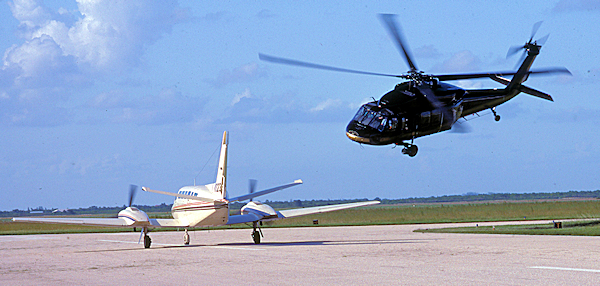
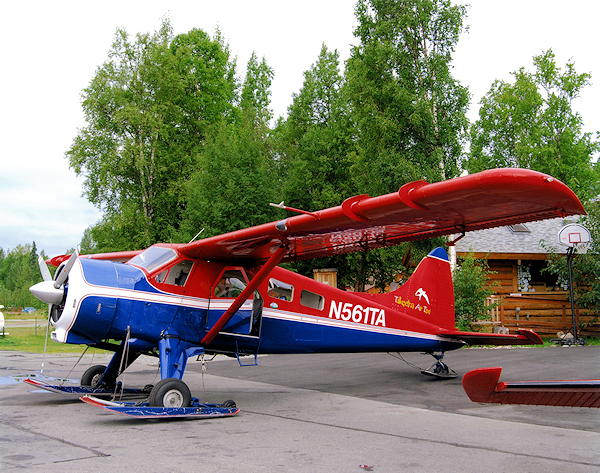
This issue of the Forum focuses on Alaskan bush planes from Paul Trask shot during trips in 2000 and 2007. The FORUM is presented as an opportunity for each member to participate in the Journal by submitting interesting or unusual photographs. Most of the images come from contributions to the AAHS archives. Unfortunately, with older images the contributor information has been lost. Where known, we acknowledge them. Negatives, slides, black-and-white or color photos with good contrast may be used if they have smooth surfaces. Digital submissions are also acceptable, but please provide high resolution images (>3,000 pixels wide). Please include as much information as possible about the image such as: date, place, msn (manufacturer’s serial number), names, etc., plus proper photo credit (it may be from your collection but taken by another photographer). Send submissions to the Editorial Committee marked "Forum of Flight," P.O. Box 483, Riverside, CA 92502-0483. Mark any material to be returned: "Return to (your name and complete address)." Or you may wish to have your material added to the AAHS photo archives. |
|
|
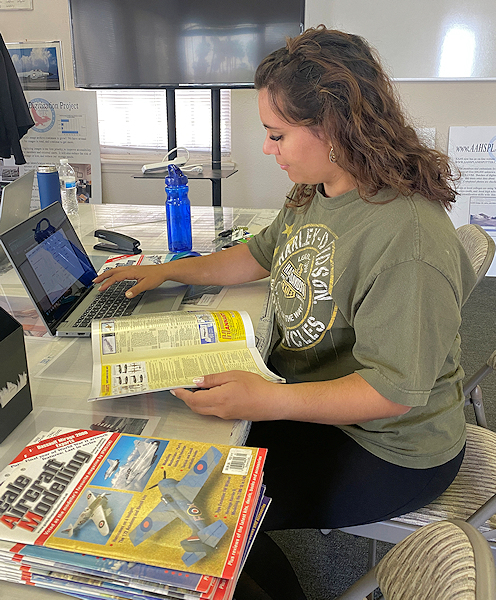
The Move We’ll miss our wonderful Huntington Beach volunteers that are not able to continue to support the AAHS activities in the Flabob office. We are looking to expand the local volunteers in the Flabob area. If you are in the area, stop by and get acquainted with other AAHS volunteers, AAHS Plane Spotter A volunteer is assigned a group of high resolution photos to catalog, as best they can, from the image content — make, model, registration number, s/n, etc. In this way, the searchable image database is expanded. Using this tool, we have been able to add over 30,000 images to the database with just a handful of volunteers. But, we could do more with more volunteers. The Society has also used the tool to help introduce students to aviation. San Diego State University’s Intro to Aerospace Engineering, taught by AAHS member Dr. Gary Fogel, has used AAHSPlaneSpotter as an extra credit opportunity. This year’s class had 62 student participate resulting in almost 1,000 images being cataloged. So, if you would like to help the Society with this project just point your browser at www.aahsplanespotter.com. Try the demo. Read the FAQ’s. Then, send an email to Ivolunteer@aahsplanespotter.com indicating your would like to help. |
|
|
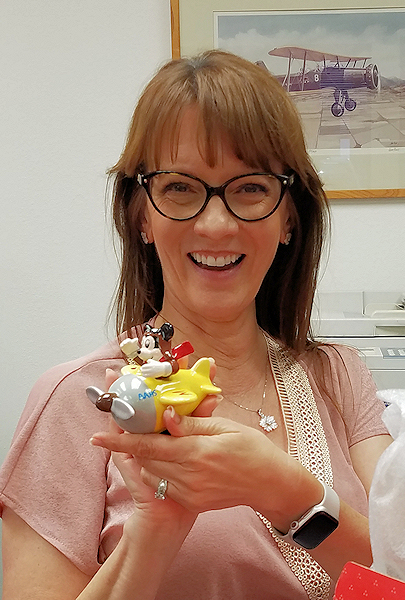
AAHS Salutes Our ‘Huntington Beach Hero’ As we continue the process of consolidating our offices at our Flabob headquarters, the prospect of losing one of our best assets, our team at Huntington Beach, looms over our operations. We’ve done interviews, found replacement skillsets, and completed training sessions, but we realize that replacing the genuine love and interest in AAHS’ well-being that our bookkeeper, Synde Resler has provided for us, will be hard to duplicate. Syndy started with AAHS in 2019, (our first paid bookkeeper position), replacing Tom Butz, who previously had been performing the bookkeeping function as a volunteer. Syndy started her position with little or no documentation on any of the office operations, and had to learn most of what goes on at AAHS ‘on the fly’. Syndy, a quick study, not only grasped all of the necessary accounting functions needed at AAHS, she easily took on other much needed functions that had been lacking in AAHS’ management practices. Consolidation of supplies purchases, creating separate bank accounts for specific needs, creating an Office Operations handbook, working with vendors to allow AAHS to take advantage of payment discounts are just a few of the many actions Syndy took the lead in completing, for the benefit of AAHS. Syndy managed AAHS funds as if they were her personal checking account. When an electric bill from the Headquarters office seemed excessive, Syndy drove 65 miles round trip to review the Edison meter onsite, and confer with Flabob airport personnel to get to the root cause of the discrepancy. Syndy always provided AAHS leadership with financial options to improve on a planned management decision, or, to mitigate costs where possible, like generating planned cost forecasts to evaluate the impact of rental storage for AAHS vs purchased storage containers. Syndy’s great skills with numbers, while extremely important, has not been her greatest contribution. That has been her interaction with AAHS members and volunteers. As an office manager, Syndy became the voice most often heard by our AAHS members when calling or emailing the organization. Her genuine enjoyment in helping AAHS members with their questions and queries has made her a favorite with everyone. Clearly, AAHS has come out the better organization for having Syndy’s time and attention. All of us at AAHS recognize Syndy as our Huntington Beach Hero and thank her for her role in getting us where are today. She and her contributions will be sorely missed. Thank you, Syndy! |
|
|
YOUR GIFT. YOUR IMPACT.
Receiving your unrestricted donations: * Is an important part of our financial picture each year. We hope you will continue your generosity in helping to support the AAHS, and don’t forget you can set up your contribution as a monthly gift. Simply scan the QR code or click the DONATE button at the top of the AAHS website and make your tax-deductible donation. You can also mail your donation to us: AAHS, P.O. Box 483, Riverside, CA 92502-0483. Have questions about setting up an endowment or including the AAHS in your will? Contact the AAHS membership at: Phone:(951) 777-1332, or email: membership@aahs-online.org |
|
|
I’ve been to a number of aviation events around the country this year and I am reminded of how much of aviation has changed over the last 100 years, and, also, how much of it has remained the same. 100 years ago, pilots were rare, mysterious creatures who bent the wind to their will, viewing the earth from a vista known only to a privileged few. Today, almost 1 in 500 people in the U.S. have an active pilot’s license, over 220,000 general aviation aircraft are registered, and 6,500 plus commercial aircraft
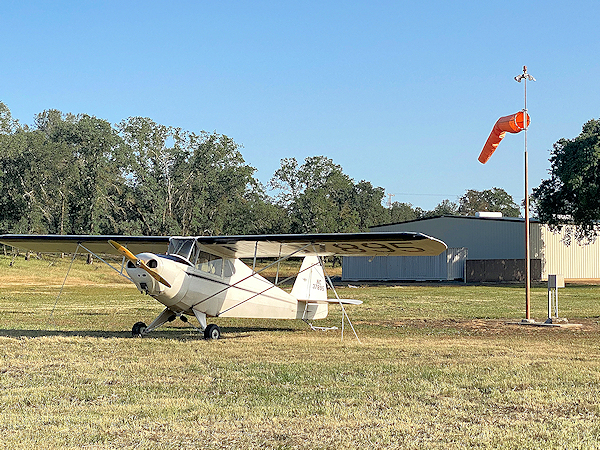
fly 853 million people annually -- enough for every man, woman and child in the U.S. to fly more than twice. Aircraft and aviation travel have come a long, long way since the 167 feet traveled by the Wright brothers in 1903. But as I rumble past tiny country airports in the Midwest, I can still regularly find someone pulling onto the ramp in the early morning light, a small, single-seat, fabric-covered aircraft, hand-propped and flown with four instruments or less. And in that airport’s community there will still likely be one more small child, wide-eyed in wonder, getting a ride over the cornfields, or learning the joy of the wind and clouds rushing by. Government employment statistics predict an increase in pilot employment to rise consistently over the next decade, to fill retiring spots, and to support ever increasing aviation travel demand. Many of these pilots will get their start as a young child on a grass strip in the Midwest, or they may transition from military service into pilot employment, or, choose this profession as adults. The average learning costs to begin a pilot career is steep, around $100,000 in 2022. And it’s not just pilots, but other vital aviation industry positions, A&P mechanics, air traffic controllers, engineers and other career choices require training that can become cost prohibitive. We’ve been focusing on our move consolidation thus far this year, but we are still committed to supporting the next generation of aviation professionals through partnerships with local aviation school programs. AAHS has acquired, through member donations, over $15,000 in the AAHS Scholarship Fund that we look forward to distributing to deserving aviation program students, midway through their training programs. It takes time and communications with school programs, counselors and students themselves to effectively distribute the AAHS Scholarship Fund, and we’d like you to consider this important and very fulfilling role at AAHS. Contact AAHS HQ at 951-777-1332 if you feel you can support AAHS and future aviation professionals with your volunteer time today. Jerri Bergen |
|