American Aviation Historical Society
MEMBERS SHOULD LOG IN FIRST TO ACCESS FULL ARTICLES
|
The AAHS has a collection of vintage, large-scale, aircraft models available for sale. The collection includes over 80 models, several pedal cars and an assortment of modeling supplies. |
|
|
Acquisition of the Douglas DB-7B and DB-7C for the Netherlands East Indies Navy
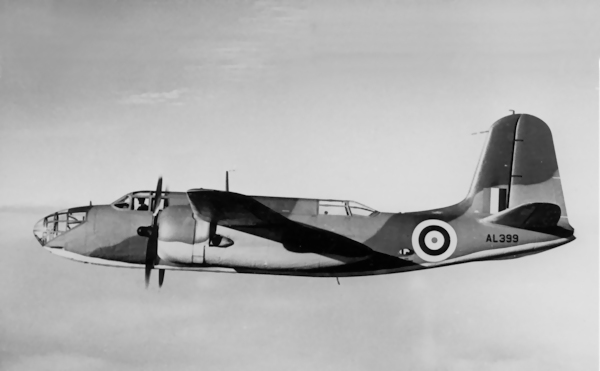
There has been confusion in accounts of the acquisition and use of the Douglas DB-7B and DB-7C by the Marine Luchtuaartdienst (MLD) - the Naval Air Service of the Netherlands East Indies - between October 1940 and May 1942. It was a tumultuous period, and few primary sources are available. In an effort to provide a more complete account of this subject, the following combines material from primary sources, particularly the archives at the Douglas Aircraft Co., with secondary source material that directly cites primary sources. From these records, a reasonably complete account of the 32 DB-7Bs and 48 DB-7Cs that were planned to be placed in service with the Marine Luchtuaartdienst (MLD), or Naval Air Service of the Netherlands East Indies, is presented. Background Britain and France declared war on Germany on September 3, 1939, after the German invasion of Poland. During the "Phony War" period that followed, the British and French continued frantically trying to rearm. The Netherlands joined the French and British effort, and all three turned to the United States for weapons, particularly aircraft. The Netherlands government combined several initiatives to procure arms from the U.S. through the Netherlands Purchasing Commission (NPC), based in New York. Efforts to place orders for aircraft were necessarily complicated by the clamor for production from the expanding but still limited output of American factories. The priority offered to the British and French in the rearming effort often pushed the NPC to the back of the line. In October 1939, the NPC placed an order for 24 Curtiss Model 75 Hawk fighters, the export version of the Air Corps P-36. However, efforts made to place orders with other manufacturers were frustrated by priorities and engine shortages. The situation changed radically in May 1940 with the German invasion of the Netherlands, Belgium, and France. The Dutch army surrendered on May 14, 1940, but the government went into exile in London. The Dutch colonies, including the Netherlands East Indies (NEI), continued efforts to rearm. In June 1940, the NPC ordered 108 Brewster Model 340s, the export version of the U.S. Navy’s SB2A, for the MLD. In October, 72 Brewster Model 339 Buffaloes, the export version of the Navy F2A, were ordered for Militaire Luchtvarrt KNIL (ML-KNIL), the equivalent of the Dutch East Indies Army Air Force. Engine shortages remained as a production roadblock and in many cases the engines to equip these orders had to be obtained through second-hand channels. Although these two production orders were placed in the summer and fall of 1940, deliveries were not scheduled until 1941. The Douglas DB-7 The Douglas DB-7 was a very capable twin-engine attack bomber, derived from the Model 7B, which first flew in October 1938. In February 1939, the French government received permission from the U.S. to purchase 100 DB-7s, the initial version of the upgraded 7B design. The French DB-7 was powered by a pair of 900-hp Pratt & Whitney SC3-G Twin Wasp engines. (Note: In this article, the manufacturer’s designation is used for those aircraft/engines not originally ordered by the . . . |
|
|
The 1923 Puerto Rican Flight: A Forgotten Epic of Air Force History
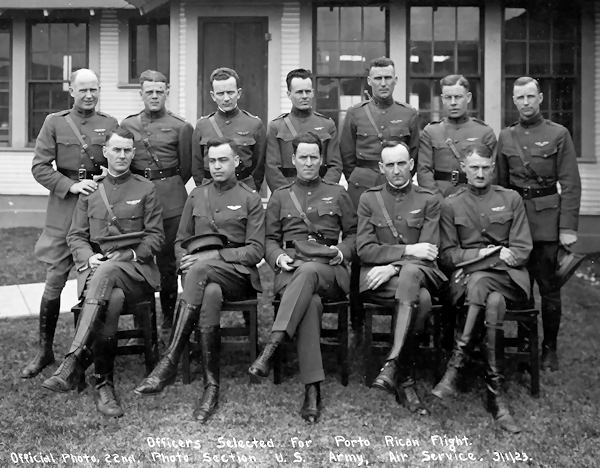
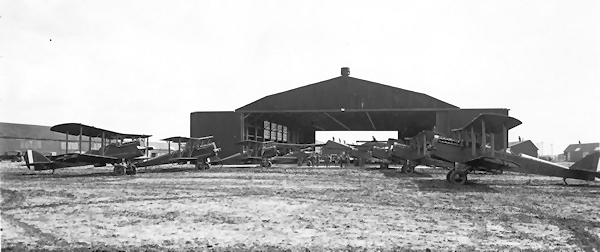
From March 3 to April 3, 1923, 12 Army Air Service pilots in six de Havilland DH-4B aircraft, under the command of Capt. Thomas G. Lanphier, successfully completed what was known as the 1923 Puerto Rican Flight. In addition to testing endurance, it was essentially a photo reconnaissance and goodwill flight of over 5,000 miles, much of it over the open water of the Caribbean Sea. The flight originated at Brooks Field, San Antonio, Tex. From there the aviators flew six DH-4s to San Juan, Puerto Rico, via Alabama, Florida, Cuba, Haiti, and the Dominican Republic. On the return flight, they reversed course to Jacksonville, Fla., then through Georgia, North Carolina, and Langley Field, Va., before terminating the flight in Washington, D.C. The two-seater DH-4B aircraft, powered by a 400-hp water-cooled, 12-cylinder Liberty engine, was modified to carry 135 gallons of fuel instead of the standard 80 gallons. The two seats were normally for a pilot in the front and his mechanic in the rear, who maintained the aircraft. In this case each mechanic was replaced by another pilot. So, on this mission the two pilots had to do their own aircraft maintenance. In flight the two pilots could trade off flying the airplane while the other took photographs, slept, or attended to other matters that needed attention. While on the ground both pilots, with the help of U. S. Marines or the U. S. Navy sailors at various stops, would service the aircraft by refueling, changing the oil if needed, servicing the controls, checking the wheels, checking the strut wires, and otherwise attending to anything that needed fixing. At each stop in the West Indies they were met by local dignitaries and wined and dined at local high-end facilities. Eleven days after the flight ended in Washington D. C., Secretary of War, John W. Weeks sent each flyer of the 1923 Puerto Rican flight a letter of commendation: SUBJECT: Commendation April 14, 1923 It gives me great pleasure to commend you for your excellent performance of duty as a member of the recent successful flight of six army airplanes from the United States to San Juan, Porto Rico and return. The establishment of airways assists the progress of aeronautics even as good highways accelerated the growth of the automotive industry and you have the distinction of being one of the . . . |
|
|
The 1923 Puerto Rico Flight Recapturing an Historic Event in Aviation History
Elsewhere in this issue of the Journal, Dr. C. Vance Haynes, Jr., discusses the 1923 round trip flight of six Army DH-4Bs from the U.S. mainland to Puerto Rico in which his father, Maj. Gen. Caleb B. Haynes, was a participant. Upon their return to Washington, Secretary of War John W. Weeks told the fliers "You have been making history. Fifty years from now, when somebody writes a history of the Air Service, what you did will be most prominently mentioned."[1]
It never happened. The flight was a remarkable achievement by any standard, yet later Air Force historians have ignored it entirely–a rather puzzling omission, as Dr. Haynes points out. The flight was front-page news, thanks to wire service reports transmitted to subscribing newspapers all across the country. And the Air Service Newsletter, the unofficial weekly record of happenings in the Air Service, covered the flight from the inside. Fortunately for the aviation historian, thousands of digitized sources like these are now just a mouse click away. Based on those sources, this companion piece to Vance Haynes’s article retells the story in the words of eye witnesses and the fliers themselves. Background of the Flight As early as mid-February 1923, details of the upcoming Puerto Rico flight appeared in the Washington newspapers. First mention in the Air Service Newsletter followed in the February 20 issue.[2] The item noted only that the Chief of Air Service "has applied for and received" War Department permission to "carry out a flying expedition of six airplanes from the United Stares to Porto Rico, via Cub, Haiti, and San Domingo" in order "to demonstrate the ease with which aerial communication may be established with insular possessions" and to collect "data relative to terrain and meteorological climatical conditions" in those regions. Two years prior, a pair of Marine Corps DH-4s had set out on a similar mission, destination the U.S. Virgin Islands. The Dominican Republic was reached without undue difficulty, but an outbreak of bubonic plague in Puerto Rico forced termination of the operation at that point. The Air Service acknowledged that the proposed route for its upcoming flight was similar to that followed by the Marines, confidently stating that officers in the know "apprehend no difficulty in negotiating the flight." The route was mapped out accordingly, with advance scout Capt. Oliver S. Ferson to "proceed by rail and boat" and arrange for oil and gasoline to be stored at landing sites other than American Naval or Marine bases. The twelve pilots selected all had "considerable cross-country experience, both overseas and in the United States, and are well qualified for a trip of this nature." Canadian born Capt. Thomas G. Lanphier, Sr., already a seasoned long-distance flier, would lead the expedition. The operational side of the flight began at the San Antonio Air Intermediate Depot, where the six DH-4B aircraft involved were being modified to carry 135 gallons of fuel, giving them a nominal 500-mile range. A newsletter dispatch noted that the San Antonio Depot "has been abuzz during the past two weeks" as final preparations for the flight were being made. During their stay, the twelve members of the "Seagull Battalion" were "extensively entertained," including "a charming luncheon" complete with place cards and pink carnations. On February 28, the Officers Club was the scene of a stag party, where "a savory and appetizing Mexican dinner had been prepared for the occasion." Final tweaks were made to the airplanes, and the 12-cylinder Liberty engines in particular, while the aviators finished their preflight preparations. The officers and men of the Depot had "nursed and petted" the DHs along and knew the ships were "right."[3] The rest would be up to the pilots flying them. Chronicling the Flight Once the flight took to the air, the early stages were extensively covered by newspapermen on the scene, whose accounts were then picked up by the Associated Press and other outlets. After leaving the mainland, coverage could only be gleaned from interim reports telegraphed by the fliers themselves or from Americans in the local areas. For ease of following and better readability, extracts from newspapers and the Air Service Newsletter have been stitched together and . . . |
|
|
The Real Story of the B-17 "All American"
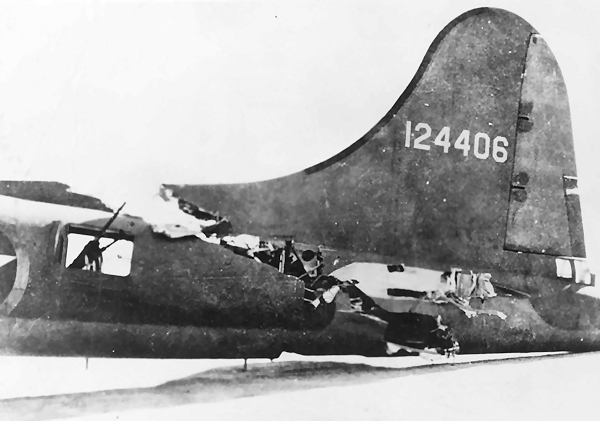
In many books and magazines on the history of WWII, few photographs of the venerable B-17 Flying Fortress are more prominent in the public eye than this striking photo, showing a B-17 flying almost literally on the spit and prayers of its crew. Having been struck by a Messerschmitt Bf 109 in the skies above North Africa, it remained airworthy long enough to not only return to base in one piece but with no deaths or injuries among its flight crew. It is often used to illustrate the incredible durability of the Flying Fortress. Yet the story behind the photo has since taken on a life of its own that has only grown in the postwar years with nearly every retelling adding more and more fantastical details to the story. Today, we will get to the bottom of the story behind this famous photograph and reveal the truth behind the B-17 known as All American. |
|
|
Thomas Wesley Benoist and His Planes
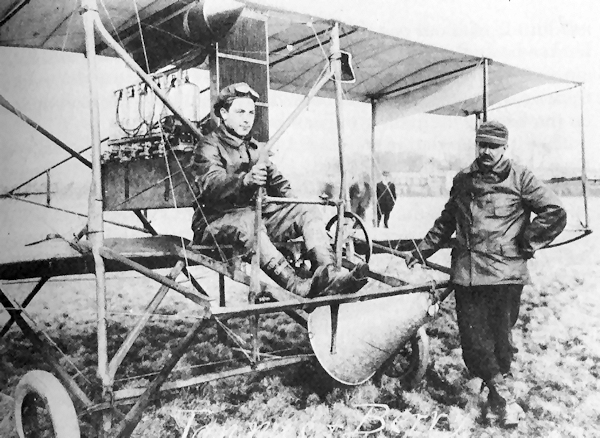
Thomas Wesley Benoist was born on December 29, 1874, at Ironton, Mo., located about 75 miles southwest of St. Louis, Missouri. He was one of 12 children. Benoist attended local schools, then took a business course. His main early interests were mathematics, mechanics, and sports. Benoist developed an interest in the automotive industry, but this shifted to an interest in flight after studying Chanute’s book Progress in Flying Machines. Around 1900 Benoist moved to St. Louis where he soon teamed up with John Berry, a well-known balloonist, who was also experimenting with dirigibles. Benoist remained with Berry for a time but this venture was not successful. Benoist saw Roy Knabenshue fly Thomas Baldwin’s airship and William Avery with a Chanute biplane glider at the St. Louis Exposition in October 1904. His aviation interest was further stimulated when he saw Knabenshue, Cromwell Dixon, Glenn Curtiss, and Lincoln Beachey all fly airships at the St. Louis International balloon and airship competition in October 1907. During this period Benoist had devised a new type storage battery that proved so successful that he and his brother Charles started producing it in 1907. He called it the "Black Jack" battery, which was sold through an auto supply company the two established. The battery and automobile supply business folded in early 1910. In October 1909 Benoist saw Glenn Curtiss fly one of his early biplanes at the St. Louis Aero Club Balloon Races and Aeronautical Tournament and became determined to learn to fly. A national aviation meet for amateur plane builders was held at Washington Park, St. Louis, July 11 to 16, 1910, and several local and visiting aero novices entered the contest. Howard Gill of California brought a Curtiss-type biplane of his own design powered by a 26-hp automobile engine. Hillery Beachey made some successful short flights with his machine during the event. Benoist attended this meet furthering his interest in learning to fly. Benoist also began to design and build his own airplane, but soon realized that this would further delay his aspirations to fly. In order to shorten this, he purchased a Gill-Curtiss type biplane, to become the first person in St. Louis to own an airplane. He also hired Howard Gill[3] to provide some initial instruction. Benoist established a workshop to make plane parts necessary to carry on the supply business. As soon as he made the first hops he learned it was badly underpowered, so he removed the revamped automobile engine and installed a locally built Boulevard aircraft engine. AEROSCO In April 1910, Benoist then partnered with E. Percy Noel to form the Aeronautical Supply Company in St. Louis, one of the first exclusive aero supply houses in the United States. Noel was a local newspaper man and aviation enthusiast, and they advertised a line of accessories and materials necessary to build an aeroplane. Located on the second floor of a building located at 308 North Twelfth Street, they offered a full line of airship and airplane parts and accessories. AEROSCO initially dealt only with the raw materials needed by aeronautical experimenters, e.g., bicycle wheels, motorcycle parts, piano wire, and various kinds and forms of wood. Before long, AEROSCO was . . . |
|
|
The United States Air Force and the Post-WWII Rebirth of the German Luftwaffe (1953–1958)
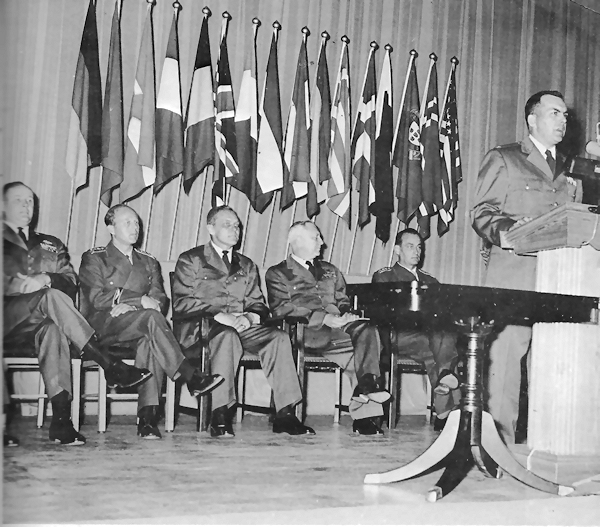
As an eight-year-old boy living in South Georgia in the late autumn of 1954, I was thrilled to learn that my mother, brother, and I would be going to West Germany with my father, then Capt. Charles L. Hoffman, Jr., courtesy of the United States Air Force. Of course, I didn’t understand why we were going, but later I learned that my father and other officers and enlisted personnel with flying training background were tasked to get the German Air Force operational again after a 10-year hiatus. The following is a brief recap of the accomplishment of this mission. The Air Base Like many other military bases in Germany during the 1950s, Landsberg Air Base owed its existence to Adolph Hitler. Hitler was no stranger to the Landsberg am/Lech area in Bavaria. In 1924 he spent nine months of a five-year prison term in Landsberg Prison. It was there that he wrote his infamous Mein Kampf (My Struggle) in which he gave, if anybody then cared, his plans for the future of Germany and Europe. After over a decade as a political rabble-rouser and schemer, Hitler became chancellor of Germany on January 30, 1933. He used the Reichstag fire to get the Enabling Act passed on March 23, 1933, which effectively made him dictator of Germany. Hitler immediately began a secret rearmament of the German military, including the Luftwaffe. When President Hindenburg died on August 2, 1934, Hitler merged the posts of chancellor and president, and gained complete control of Germany. With the beginning of compulsory military training on March 16, 1935, Germany began construction of air bases throughout the country. The Penzing area, located 20 miles almost due south of Augsburg, and three miles northeast of Landsberg am/Lech in southern Bavaria was selected for one of these bases because of the suitable geographical, navigational, and other technical aspects. Land was procured in 1935 and construction began in early 1936. An advance detachment of troops moved in on February 10, 1937, and a full complement had arrived when the base was activated March 1, 1937, as Penzing Fliegerhorst (literally "fliers’ nest," but denotes "military airfield"). The new base was completed concurrently with those at Memmingen and Leipheim, and the three became home of Kampfgeschwader (literally, a combat squadron) 255, nicknamed "Alpengeschwader" because of its proximity to the Alps. Although "geschwader" translates into "squadron," a Luftwaffe geschwader was equivalent to a U.S. Army Air Force group at that time. Penzing Fliegerhorst, at that time the most modern air base, was first occupied by the 3rd Group (equivalent to an AAF squadron) and the headquarters of the Alpengeschwader. The first assigned aircraft were twin-engine Dornier 17E and 17M "Flying Pencil" light bombers. On mobilization day, August 1, 1939, the Alpengeschwader turned in its Do 17s and reequipped with twin-engine Heinkel 111 medium bombers. The wing was redesignated KG 51, and because the edelweiss flower was its unit symbol, it became known as the "Edelweissgeschwader." When WWII began on September 1, 1939, that unit left and saw combat on all the war fronts. It was replaced by pre-flying and fighter and bomber general training units. Northwest and just outside of the town of Landsberg, the Germans began construction of a huge ammunition depot in 1940. Known as the Dynamit Aktien Gesellschaft (DAG), the . . . |
|
|
The Air Corps and the Army Housing Program of 1926
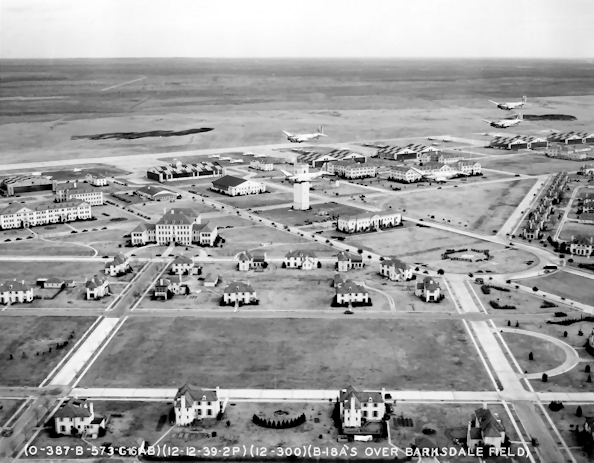
If it seems odd to start a discussion of the creation of the first permanent air bases in the United States by reviewing the layout of a Roman Legion fortress, it is to understand that the United States Army then and now is a product of the physical base layout from armies of both the past and the near past. In truth, the Roman Legion has very little in common with military installations today, but they have several points in common. First, the commanding officer’s quarters always have a central location, and second, the commanding officer and other officers are separate in their living quarters from the ordinary soldier’s barracks. Lastly, and perhaps most importantly, the officers had direct access to a place of worship. As Rome worshipped many Gods, it was less a matter of piety than it was of creating calm in the face of chaos. For much of the nineteenth Century, the U.S. Army hovered around 20,000 men, and they were scattered throughout the growing United States in two to five company posts. Often, these posts lasted only a short time until their original cause of creation, the Indian Wars, was gone. Contrary to Hollywood, the vast majority of frontier posts did not have a wooden stockade, but they did have a central parade ground. A cavalry post might have a rectangular parade ground, while an infantry post the parade ground would be more compact. Sometime in the seventeenth Century, it was decided that armies would parade for the King or commanding officer. In Europe, the parade of a city’s regiment was on a public road outside the urban-centered base, while in America, the parade was on the military base. However, the public was invited to these parades. The parade ground was central. On these posts, one side of the parade ground would be the officer quarters, while the opposite side typically had the barracks. Each barrack building would house one company, though eventually, most barracks became double barracks for two companies to save on construction costs. At one end would be the hospital, and at the other end would be the base headquarters. Also, there would be a base chapel or church at the end. Other typical buildings might include a bakery, a laundry, a post-exchange, and a jail. From the very beginnings of the Republic, the responsibility for the design and construction of the Army’s bases belonged to the Quartermaster Corps. In the antebellum period, the Army was quite small and divided between the westward expansion and coastal fortifications (mostly located along the east coast at that time). However, troops rarely constructed a base, and most workers were civilians under the direction of the quartermaster. Sometimes, the Army was moving around so far from civilization that there were no civilian workers to construct the temporary bases (10 years at most); nonetheless, the Army needed to house three to five companies of troops. In this circumstance, the commanding officer and his soldiers built the base. The result of this was a hodgepodge of either virtually no architectural style or a sometimes elegant design taken from the pages of a newspaper the officer happened to possess. As virtually all officers of the Army at that time had graduated from West Point . . . |
|
|
Stewart International Airport: Military to Commercial Transition
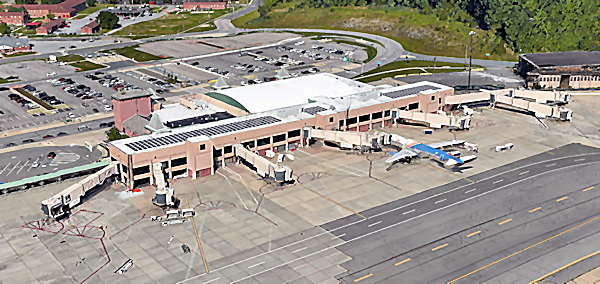
Located in the mid-Hudson Valley, Newburgh’s Stewart International Airport, south of Kingston and some 65 miles north of Manhattan, is one of three secondary airports, along with White Plains’ Westchester County and Islip’s Long Island MacArthur, serving the New York area. Having transitioned from a military to a commercial facility and relying on a regional market base that usually avails itself of greater destination choice in Albany and the three major New York airports, it has grappled with sustained airline service in the midst of limited notoriety, a recession, and the pandemic. Origin and Military Application Seeds grow from farmland and, in this case, so did an airport, when Thomas Archibald Stewart, an aviation enthusiast and descendent of prominent local dairy farmer Lachlan Stewart, convinced his uncle, Samuel L. Stewart, to donate 220 acres of family farmland to the city of Newburgh for the purpose of establishing an airfield. "Archie thought that a city in the 20th century would need an airport to prosper, just as a city in the 19th century needed a railroad," according to the historical marker in front of the current-day terminal. "He did something about it. In 1930, his family donated the original tract of land for this airport." Because the area, like the rest of the country, had sunk into the depths of the Great Depression at the time, the dirt expanses remained untouched until 1934 when Douglas MacArthur, then superintendent of the U.S. Military Academy at West Point, proposed using the field for cadet training. The Academy itself acquired the field for a token $1.00, but it was not for another five years that it was transformed into something usable - in this case, an equally-dirt landing strip. Deactivated in 1970 and subsequently acquired by New York State, it remained dormant for 13 years, at which time the 105th Airlift Wing and the 213th Engineering Installation Squadron of the New York Air National Guard established the Stewart Air National Guard Base for its Lockheed C-5A Galaxy fleet. The 105th AW operated the C-5As from 1985 to the departure of its last one in 2012. The C-5s were replaced by Douglas C-17 Globemaster IIIs, which the 105th continues to operate today. Alongside the 105th AW, the base was host to the Marine Aerial Refueler Transport Squadron 452 (VMGR-452) from September 1988 to December 2022, when the unit was deactivated. The Marines operated Lockheed Martin KC-130Js and KC-130Ts during this period and participated in operations in the Mediterranean, Horn of Africa, and the Middle East where their primary mission was to support the 22nd, 24th, and 26th Marine Expeditionary Units. Stewart Air Force Base was one of the sites chosen in the late 1950s as part of a comprehensive North American Air Defense System called the Semi-Automatic Ground Environment (SAGE), a network of eight installations that was intended to collect information from radar stations and retransmit that . . . |
|
|
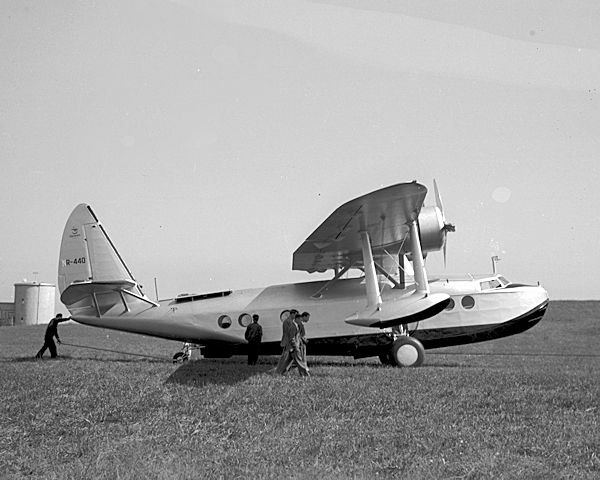
Vol. 69, No. 3, Fall 2024 Just wanted to congratulate you on the content and layout of the most recent AAHS journal. You did a super job, even under tremendous stress. The Jack Knight combo of the two articles flowed smoothly which is no small task, indeed. My Pietenpol article was also well edited with great choice of images. I also completely enjoyed the very detailed article on Hughes and the design of the "Spruce Goose." You’ve done a magnificent job under a lot of challenges through the years. The quality of the journal is a testament to your great efforts. I hope you have a chance for a break and let others bear some of the load. You’ve earned it. Scott Fisher "The Achilles Heel of the Hercules," by Roger Raleigh, pp. 163-178, of the V.69, N.3, (Fall 2024) Hate to tell you this, but major errors exist in this article. I have not finished reading all of it. But on p. 164, the date for Hughes’ S-43 crash on Lake Mead is May 17, 1943, not July 7, 1946. The latter 1946 date was Hughes’ crash into Beverly Hills, Calif., while flying the XF-11, in which he was nearly killed. On the same page, the author refers to the "triple stabilizers" of the (Sikorsky) S-43. As far as I know, the S-43 had only a single stabilizer. I don’t know how many other errors there are in this article, but I thought you ought to know before you are deluged with corrections. J. B. Rivard, [Editor’s Note: Mr. Rivard is absolutely correct. Regarding the triple stabilizer, a quick review shows that none of the Sikorsky flying boats had a triple stabilizer with the early ones having a twin-boom stabilizer and the S-42 having twin stabilizer. In defense of the author, Hughes was in close association with Lockheed and Kelly Johnson at this time. He would have been aware of the Constellation’s design using the triple stabilizer as well as the Electra’s twin stabilizer. And, of course, the Boeing 314 that he was in essence competing against to some degree also used the triple stabilizer design after finding the original single stabilizer was insufficient.] "The First Night Air Mail: The Story of Jack H. Knight’s Epic Flight" and cover Just received the latest AAHS Journal and look forward to perusing it tonight.
Noticed the cover photo and the heading photo on page 179 are both Chuck Stewart photographs, which is certainly correct. However, the date of both those pictures is 2008, not 2102 as printed. Both pics were taken here at Antique Airfield during our 2008 AAA/APM Fly-in "Air Mail Days" where we celebrated the 90th Anniversary of U.S. Air Mail. We had 17 antique/classic aircraft and flew mail from Antique Airfield, to Ottumwa NAS, Iowa City, Iowa, and return over four days during the event. Of those 17, 11 had actually been mail planes in the 1920s & 1930s. My picture below shows the DH-4 parked at Antique Airfield along with Frank Schelling’s Hisso powered Jenny, Addison Pemberton’s Boeing Model 40, and Greg Herrick’s Ford Tri-Motor 1077, (the oldest flyable Ford) during the 2008 event. It was the only time the DH-4 has been here and I’m certain it was the only time these four airplanes were in the same place at the same time, and most likely ever will be again. Brent Taylor [Editor’s Note: Brent is absolutely correct. A check of the digital photo’s EXIF metadata shows that it was taken in September 2008. We should have checked more carefully.] "Trenton-Mercer Airport: New Jersey’s Secondary Airfield" Unbelievably outstanding excellent issue!!!! Fall 2024!!! I’m confident I know – since having flown on Allegheny’s DC3s, Martins, and Convairs on the jumpseat countless times. Dad was an Allegheny pilot flying all the DC3s, Martins, and . . . |
|
|
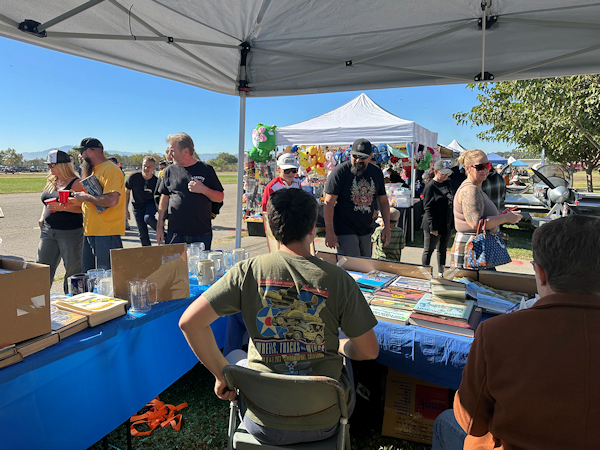
In my last message to our members, I outlined in broad strokes some of the many upgrades we’re initiating to update AAHS as an organization. We’ve put into place necessary back-office updates (storage servers, new domain names, etc.) and are reaching out to develop relationships with other like-minded organizations. One such organization is the International Plastic Modelers Society (IPMS), where AAHS sponsored trophies for winning aviation models at the Orange County Regional Modeling event, in October (you’ll be able to see our story on that event at our new Flightline Blog, coming out in the new year!) In another outreach event, on September 21, AAHS volunteers attended a ‘history’ day at the Santa Monica Museum of Flying, to celebrate the Douglas World Cruiser’s 100th Anniversary with a talk by AAHS Member (and museum curator) Mike Machat. Mike’s done a fabulous job of preserving aviation artifacts of a pivotal age in California aviation history, manufacturing giants such as Douglas Aircraft, Lockheed, and Northrop, responsible for so much of California’s early industrial leadership. With recent donations from various sources, we have hundreds of (duplicate) Douglas art posters that we’ll be donating to the Museum of Flying’s Gift Shop to support their preservation efforts. And AAHS has been working to partner with our landlord, Flabob Airport, in promoting the historic and educational opportunities on the field. Flabob held its annual Veteran’s Day event on November 11, where AAHS again sold books and artwork to locals and visitors, met with young people interested in aviation, and acquired more new members. As we continue to settle in and reorganize HQ after our move from Huntington Beach, we continue our partnership not only with Flabob Airport, but other local organizations that support aviation awareness and education. Local colleges, such as California Baptist University, the Flabob Aviation Preparatory Academy (high school level) and local flight schools at nearby Riverside Airport will be additional opportunities for AAHS to share its mission. Our new year will bring exciting new projects that will provide opportunities for our membership to get more involved in both youth aviation and historic preservation. We’d look forward to hearing from you!
Jerri Bergen |
|